Why Browser Bookmarks Are Obsolete in 2026
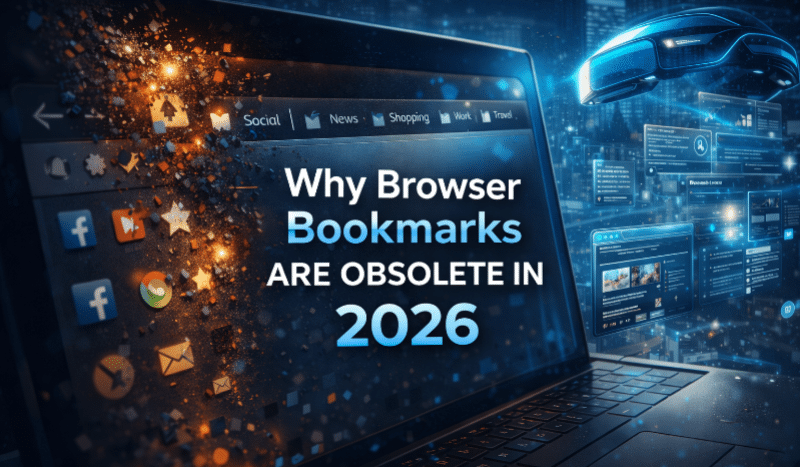
For more than two decades, browser bookmarks helped users save and revisit important websites. From students and researchers to developers and content creators, everyone relied on bookmarks as their primary way to organize the web. However, in 2026, browser bookmarks are no longer enough.
The way we consume, store, and reuse information has fundamentally changed. The explosion of remote work, AI tools, cloud platforms, and collaborative workflows has exposed the limitations of traditional bookmarks. Today’s professionals need context, searchability, accessibility, and scalability—features bookmarks simply cannot provide.
This article explains why browser bookmarks are becoming obsolete, what is replacing them, and how 99RDP’s remote desktop solutions support modern knowledge-driven workflows.
1. The Core Problem with Browser Bookmarks

Browser bookmarks were designed for a simpler internet. In 2026, the web is faster, deeper, and more complex.
Here’s where bookmarks fall short:
- They store links without context
- They depend on human memory
- They lack advanced search and metadata
- They remain browser- and device-dependent
- They do not scale for teams or long-term projects
Most users save hundreds—or even thousands—of bookmarks and rarely revisit them. Over time, bookmarks turn into a digital junk drawer instead of a productivity tool.
In contrast, modern workflows demand structured information, not just saved URLs.
2. Information Has Become Knowledge-Centric
The biggest shift in 2026 is not technological—it’s cognitive.
People no longer just “save” information. They:
- Research deeply
- Cross-reference ideas
- Build long-term knowledge systems
- Collaborate across devices and locations
Bookmarks only answer “Where is this link?”
Modern users ask “Why did I save this, how is it useful, and where does it fit?”
That’s why knowledge management systems are replacing bookmarks.
Knowledge Management Tools vs Browser Bookmarks
| Feature | Browser Bookmarks | Knowledge Management Tools |
|---|---|---|
| Context | ❌ None | ✅ Notes, summaries, tags |
| Search | ❌ Basic | ✅ Full-text & semantic |
| Organization | ❌ Folders only | ✅ Graphs, databases |
| Collaboration | ❌ No | ✅ Yes |
| Device Independence | ❌ Limited | ✅ Cloud-based |
| Long-Term Value | ❌ Low | ✅ High |
Knowledge tools treat information as assets, not just links. They allow users to store webpages alongside notes, screenshots, references, and personal insights.
In 2026, this approach is no longer optional—it’s essential.
Remote Work Accelerated Bookmark Obsolescence
Remote and hybrid work environments exposed another major weakness of bookmarks.
Modern professionals work across:
- Multiple devices
- Different operating systems
- Cloud platforms
- Virtual machines and servers
Browser bookmarks remain tied to:
- One browser
- One user profile
- One device ecosystem
This creates friction.
Professionals now prefer centralized knowledge hubs that are accessible anytime, anywhere—especially when working on remote desktops or virtual servers.
Why Infrastructure Matters in Knowledge-Driven Workflows
Knowledge tools are powerful, but they still need reliable infrastructure to function efficiently.
This is where Remote Desktop Protocol (RDP) plays a critical role.
Instead of managing heavy applications locally, professionals increasingly:
- Run research tools on remote machines
- Access centralized environments
- Maintain consistent workflows across locations
This is exactly where 99RDP fits in.
How 99RDP Supports the Post-Bookmark Era

A. Centralized Knowledge Access
99RDP allows users to run their entire digital workspace on a remote Windows environment. This means:
- Knowledge management tools remain accessible from anywhere
- Data stays centralized and secure
- Users don’t rely on browser-specific bookmarks
Whether you are a researcher, developer, marketer, or student, 99RDP ensures your knowledge ecosystem stays consistent and always available.
B. Ideal for Heavy Research & Content Work
Modern knowledge workflows involve:
- Multiple tabs
- AI tools
- Databases
- Analytics platforms
- Documentation systems
Running all of this on a local system can cause performance bottlenecks.
With 99RDP’s high-performance RDP servers, users gain:
- Dedicated resources
- Stable performance
- Faster multitasking
- Reduced local system dependency
This is especially useful for professionals managing large volumes of information daily.
C. Secure Environment for Long-Term Knowledge Storage
Bookmarks offer no security model. Anyone with browser access can see them.
99RDP provides:
- Secure login access
- Isolated environments
- Controlled permissions
- Stable uptime
For teams and individuals building long-term knowledge bases, this level of security and reliability is essential.
The Rise of “Second Brain” Systems
In 2026, many professionals follow the concept of building a digital second brain—a system where ideas, references, and insights live independently of memory.
Browser bookmarks cannot support this model because they:
- Lack structure
- Lack intelligence
- Lack scalability
Knowledge systems, combined with remote infrastructure like 99RDP, allow users to:
- Think long-term
- Reuse insights
- Build compounding knowledge
- Stay productive across years, not just sessions
Why Bookmarks Will Still Exist—But Not Lead
Bookmarks won’t disappear completely. They will still work for:
- Temporary links
- Casual browsing
- Short-term needs
However, they will no longer be the primary method of organizing the web.
Just as notepads didn’t disappear after digital tools emerged, bookmarks will remain—but their dominance is over.
The Future Belongs to Structured Knowledge + Remote Access
The winning workflow in 2026 combines:
- Knowledge management tools for thinking and organization
- Remote desktop environments for execution and access
- Scalable infrastructure for long-term growth
99RDP enables this future by offering:
- Reliable RDP servers
- Flexible plans
- High uptime
- Cost-effective remote computing
Instead of managing scattered bookmarks across devices, users can operate from one powerful, centralized environment.
Final Thoughts
Browser bookmarks were built for an earlier version of the internet. In 2026, they no longer match how professionals think, work, or collaborate.
Knowledge today is:
- Dynamic
- Context-driven
- Collaborative
- Long-term
To keep up, users must move beyond bookmarks and adopt structured knowledge systems supported by reliable remote infrastructure.
That’s why combining modern knowledge management practices with 99RDP’s remote desktop solutions is not just an upgrade—it’s a necessity for the future of digital work.
EXPLORE MORE ; Why Python Automation Runs Better on a High-CPU RDP

READ OUR BLOGS