
GNU Linux-libre 7.0 vs Standard Linux: Freedom, Performance, and the Future of Open Computing

The Linux ecosystem has evolved into one of the most powerful and flexible foundations of modern computing. From servers and cloud infrastructure to smartphones and embedded systems, Linux is everywhere. But within this ecosystem, an important divide exists—one that goes beyond features and performance.
With the release of GNU Linux-libre 7.0, that divide has become more relevant than ever.
On one side, you have standard Linux kernels, designed for maximum compatibility and performance. On the other, GNU Linux-libre represents a purist approach—removing all proprietary code to ensure complete user freedom.
So which one should you choose? And more importantly, how do these choices impact real-world usage in 2026?
Let’s break it down in detail.
Understanding GNU Linux-libre 7.0
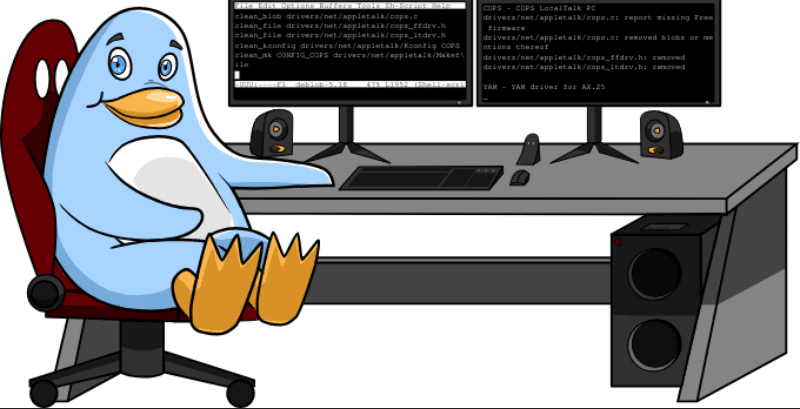
GNU Linux-libre is not a separate operating system—it’s a cleaned version of the Linux kernel. It is derived from the mainline Linux kernel (in this case, version 7.0) but undergoes a rigorous process known as “deblobbing.”
This process removes:
- Proprietary firmware binaries
- Closed-source drivers
- Any code that requires non-free components to function
The result is a kernel that is:
- Fully open-source
- Completely auditable
- Aligned with the philosophy of software freedom
This project is maintained by the Free Software Foundation Latin America, which plays a key role in promoting ethical computing practices worldwide.
What Defines Standard Linux?
Standard Linux kernels—the ones used in distributions like Ubuntu, Fedora, and Debian – take a more pragmatic approach.
They include:
- Firmware blobs for Wi-Fi, GPUs, and CPUs
- Microcode updates from Intel and AMD
- Proprietary drivers when necessary
This ensures:
- Broad hardware compatibility
- Better performance
- Seamless installation and usage
In essence, standard Linux prioritizes functionality and user experience, even if it means including non-free components.
Philosophical Divide: Freedom vs Practicality
At its core, the difference between GNU Linux-libre and standard Linux is philosophical.
GNU Linux-libre 7.0
- Believes users should have complete control over their systems
- Rejects any software that cannot be studied or modified
- Promotes long-term digital independence
Standard Linux
- Focuses on delivering a working system for everyone
- Accepts proprietary components as a practical necessity
- Prioritizes usability over ideology
This debate has existed for decades, championed by figures like Richard Stallman, who argue that software freedom is a fundamental right.
Hardware Compatibility: The Biggest Differentiator
One of the most critical differences lies in hardware support.
GNU Linux-libre 7.0 Limitations
Modern hardware often depends on proprietary firmware. By removing these components, Linux-libre can struggle with:
- Wi-Fi adapters (Intel, Broadcom, Realtek)
- Graphics cards (especially NVIDIA and AMD GPUs)
- Bluetooth modules
- Advanced CPU features
Studies and community reports suggest that a majority of consumer-grade laptops require proprietary firmware for full functionality.
This means users may experience:
- No wireless connectivity
- Reduced display performance
- Limited peripheral support
Standard Linux Advantage
Standard Linux kernels include necessary firmware, enabling:
- Plug-and-play hardware support
- Automatic driver loading
- Full utilization of system capabilities
For most users, this translates into a smooth and frustration-free experience.
Conclusion:
If you want your system to “just work,” standard Linux is the clear winner.
Performance Comparison
Performance is another area where differences emerge.
GNU Linux-libre 7.0
Without proprietary drivers:
- GPU acceleration may be limited
- Power management may be less efficient
- Network speeds may be reduced
However, in some cases:
- Simpler code paths can improve stability
- Reduced background firmware activity can enhance predictability
Standard Linux
With full driver support:
- Optimized CPU and GPU performance
- Better energy efficiency
- Enhanced system responsiveness
Real-world takeaway:
Standard Linux typically delivers better performance, especially for gaming, multimedia, and heavy workloads.
Security and Trust: A Nuanced Perspective
Security is often cited as a major advantage of GNU Linux-libre—but the reality is nuanced.
GNU Linux-libre Strengths
- Eliminates unknown proprietary code
- Reduces risk of hidden backdoors
- Ensures complete auditability
This is particularly important for:
- Government systems
- Research institutions
- Security-sensitive environments
Standard Linux Trade-offs
While standard Linux includes proprietary components:
- Many firmware blobs are widely tested
- Security updates are regularly released
- Risks are often theoretical rather than actively exploited
Balanced view:
Linux-libre offers maximum trust and transparency, while standard Linux offers practical, real-world security.
Usability and Learning Curve
GNU Linux-libre 7.0
- Requires careful hardware selection
- May need manual configuration
- Limited mainstream support
This makes it more suitable for:
- Advanced users
- Open-source enthusiasts
- Researchers
Standard Linux
- Beginner-friendly
- Extensive documentation
- Large community support
Ideal for:
- Students
- Developers
- Everyday users
The Rise of Sovereign Computing
In 2026, the concept of digital sovereignty is gaining momentum.
Organizations want:
- Control over their data
- Independence from vendors
- Transparency in software systems
GNU Linux-libre fits perfectly into this trend by offering:
- Fully open infrastructure
- No hidden dependencies
- Long-term sustainability
Overcoming Limitations with 99RDP
Despite its advantages, GNU Linux-libre faces a practical challenge: hardware compatibility.
This is where 99RDP becomes a strategic solution.
1. Run Linux-libre Without Hardware Constraints
Instead of relying on your local machine:
- Use remote servers via 99RDP
- Access a fully configured Linux-libre environment
- Avoid compatibility issues entirely
2. High-Performance Remote Infrastructure
99RDP offers:
- Dedicated computing resources
- High-speed connectivity
- Reliable uptime
This ensures that even a minimal Linux-libre setup can perform efficiently.
3. Secure and Isolated Workspaces
By using remote desktop environments:
- Sensitive operations remain isolated
- Local system risks are minimized
- Data control is enhanced
4. Scalability for Modern Workflows
Whether you’re a developer or an organization:
- Scale resources as needed
- Deploy multiple instances
- Access systems globally
Real-World Scenarios
Cybersecurity Research
Run fully auditable systems without proprietary interference.
Open Source Development
Build and test software in a completely free environment.
Public Sector Projects
Ensure transparency and compliance with open-source policies.
Remote Workstations
Access powerful Linux-libre systems from low-end devices using 99RDP.
When Should You Choose GNU Linux-libre 7.0?
Choose it if:
- You prioritize freedom over convenience
- You need maximum transparency
- You operate in high-security environments
When Should You Stick with Standard Linux?
Stick with it if:
- You want a smooth, hassle-free experience
- You rely on modern hardware
- You need high performance
The Hybrid Approach: Best of Both Worlds
In reality, you don’t have to choose strictly one or the other.
A hybrid strategy works best:
- Use standard Linux locally
- Use GNU Linux-libre on remote systems via 99RDP
This allows you to:
- Maintain usability
- Ensure freedom where it matters
- Optimize performance and flexibility
Final Thoughts
GNU Linux-libre 7.0 is more than just a kernel release—it’s a powerful statement about who controls technology.
It challenges the industry to rethink its reliance on proprietary components and pushes the boundaries of what truly open computing looks like.
At the same time, standard Linux continues to dominate because it solves real-world problems efficiently.
The key takeaway:
- GNU Linux-libre represents idealism and control
- Standard Linux represents practicality and performance
And with solutions like 99RDP, the gap between the two is no longer a limitation—it’s an opportunity.

Conclusion
The future of computing isn’t about choosing sides—it’s about leveraging the strengths of both approaches.
As open-source adoption grows and privacy concerns intensify, GNU Linux-libre will continue to gain relevance. Meanwhile, standard Linux will remain the backbone of modern infrastructure.
The smartest users in 2026 won’t pick one—they’ll use both strategically.
EXPLORE MORE ; Why Every Developer Installs These 6 CLI Tools First on Linux
READ OUR BLOGS


