
AerynOS 2026.03 vs Traditional Distros: What Makes It Stand Out?

The Linux ecosystem has always been diverse—from stable, long-term distributions like Ubuntu and Debian to bleeding-edge systems like Arch Linux. But with the release of AerynOS 2026.03 powered by GNOME 50, a new contender is redefining what a modern Linux distribution should look like.
This article breaks down how AerynOS differs from traditional Linux distros, why it matters, and how developers can leverage platforms like 99RDP to fully utilize its potential.
Understanding Traditional Linux Distros
Before diving into AerynOS, let’s define “traditional distros.”
Common Examples:
- Ubuntu (Debian-based)
- Fedora (Red Hat ecosystem)
- Debian (ultra-stable base)
- Arch Linux (rolling release)
Core Characteristics:
- Strong backward compatibility
- X11 + Wayland hybrid support
- Package managers like APT, DNF, Pacman
- Stability-focused releases
These distros prioritize reliability over radical innovation.
What is AerynOS 2026.03?
AerynOS (evolved from Serpent OS) is a modern, from-scratch Linux distribution designed for:
- Developer efficiency
- Clean system architecture
- Next-gen desktop technologies
Unlike traditional systems, AerynOS is built with a forward-looking philosophy, not legacy compatibility.
AerynOS vs Traditional Distros: Key Differences
1. Wayland-First vs Legacy Support
AerynOS:
- Fully Wayland-first (no X11 dependency)
- Modern graphics stack
Traditional Distros:
- Still maintain X11 compatibility
- Slower transition to Wayland
Why it matters:
Wayland improves:
- Security
- Performance
- Multi-display support
Insight: Most major Linux distros are still in transition phase, while AerynOS has already committed fully.
2. Cutting-Edge vs Stability-Focused
AerynOS:
- Ships latest:
- GNOME 50
- Kernel updates
- Mesa graphics stack
Traditional Distros:
- Often lag behind to ensure stability
Example:
- Ubuntu LTS prioritizes long-term support
- AerynOS prioritizes latest innovation
3. Package Management: Moss vs Traditional Tools
AerynOS:
- Uses Moss (modern package manager)
- Faster dependency resolution
- Built for developers
Traditional Distros:
- APT, DNF, Pacman (proven but older design)
Why it stands out:
- Cleaner dependency handling
- Improved reproducibility
4. Desktop Experience: GNOME 50 Advantage
AerynOS integrates GNOME 50 early, offering:
- Fractional scaling
- VRR (Variable Refresh Rate)
- Better UI consistency
Traditional Distros:
- May delay GNOME updates
- Often ship older desktop versions
Result:
AerynOS delivers a next-gen desktop experience first.
5. Minimal Legacy Bloat
AerynOS:
- Built from scratch
- No historical baggage
Traditional Distros:
- Carry years of legacy dependencies
Impact:
- Faster system performance
- Cleaner architecture
6. Developer-Centric Design
AerynOS is optimized for:
- Dev environments
- Testing
- Modern workflows
Traditional distros are:
- General-purpose
- User-friendly but less optimized for cutting-edge dev work
Real-World Comparison Table
| Feature | AerynOS 2026.03 | Traditional Distros |
|---|---|---|
| Display Server | Wayland-only | X11 + Wayland |
| Updates | Bleeding-edge | Stable / delayed |
| Package Manager | Moss | APT / DNF / Pacman |
| Desktop | GNOME 50 (latest) | Older versions (often) |
| Architecture | Modern, clean | Legacy-influenced |
| Target Users | Developers, power users | General users |
Why 99RDP Makes AerynOS Even More Powerful
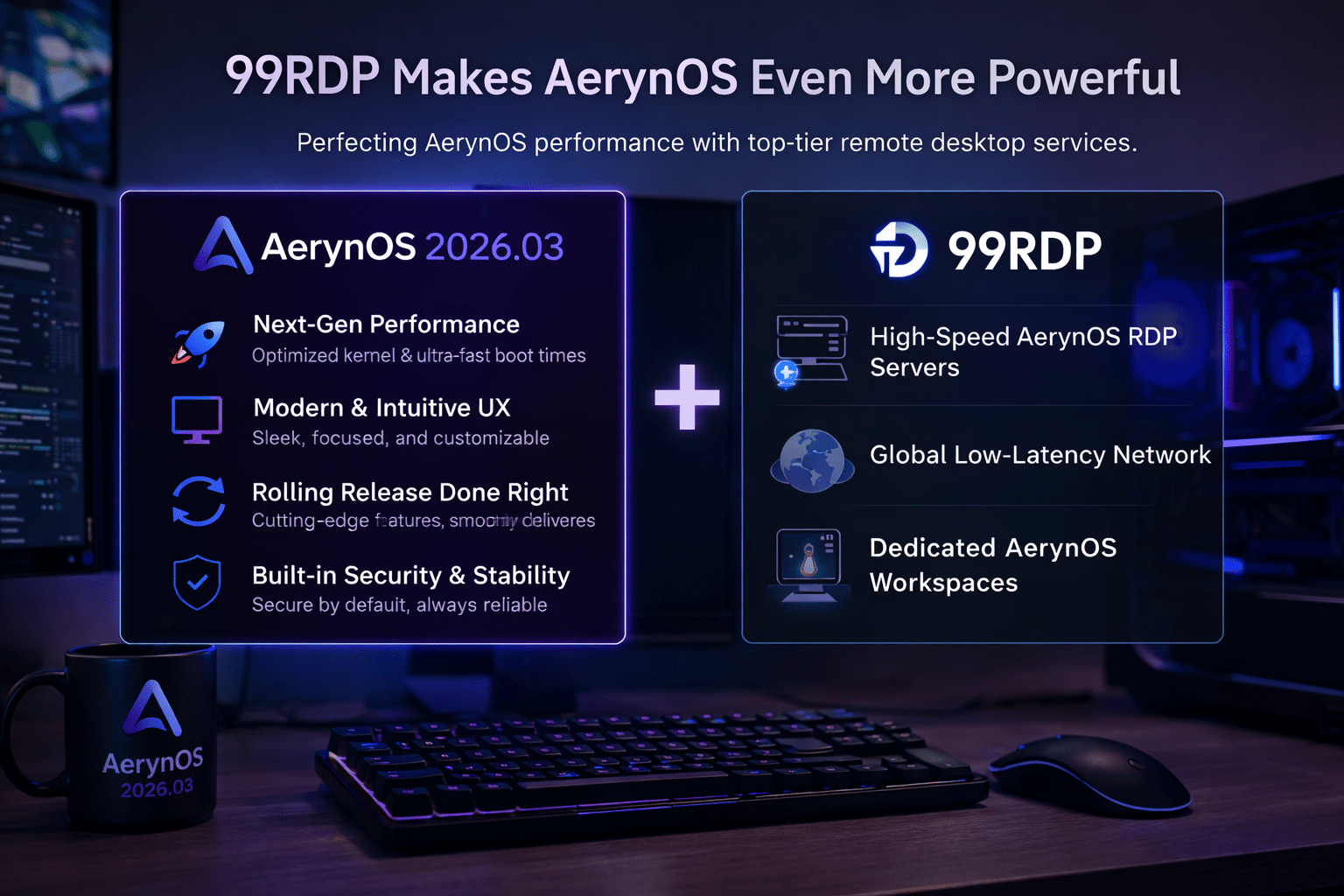
Running AerynOS locally is great—but combining it with remote infrastructure unlocks its true potential.
1. Instant Access to Cutting-Edge Linux
With 99RDP:
- Deploy Linux environments instantly
- No need for manual setup
Ideal for testing AerynOS features quickly.
2. High-Performance GNOME 50 Testing
GNOME 50’s features like:
- VRR
- Wayland rendering
require strong hardware.
99RDP provides:
- Smooth remote desktop experience
- Dedicated performance
3. Cost Efficiency
Instead of upgrading your PC:
- Use scalable RDP servers
- Pay only for what you use
4. Secure Development Environment
- Isolated environments
- Reduced risk
- Ideal for experimentation
5. Work From Anywhere
- Access AerynOS remotely
- Perfect for:
- Students
- Developers
- Remote teams
Where Linux is Heading
AerynOS reflects broader Linux trends:
1. Wayland will dominate
2. Rolling releases will grow
3. Developer-first distros will rise
4. Cloud desktops (like 99RDP) will become standard
Final Verdict
AerynOS 2026.03 is not just another distro—it’s a statement about the future of Linux.
It stands out because:
- It removes legacy limitations
- Embraces modern technologies fully
- Prioritizes developers and performance
Compared to traditional distros, AerynOS is:
- Faster
- Cleaner
- More future-ready
Key Takeaways
- AerynOS = Wayland-first, modern Linux
- Traditional distros = stable but slower to evolve
- GNOME 50 gives AerynOS a major edge
- 99RDP enhances usability with remote scalability
EXPLORE MORE ; Windows vs Linux

READ OUR BLOGS


