
Canonical’s Ubuntu Pastebin Shutdown Signals a New Era for Linux Infrastructure

The Linux ecosystem has always evolved through reinvention. Tools rise, communities adapt, workflows mature, and infrastructure shifts toward new operational realities. Canonical’s decision to shut down Ubuntu Pastebin in 2026 may initially appear like a small administrative cleanup, but the broader implications tell a much bigger story about the future of Linux infrastructure, remote operations, and cloud-native engineering.
For years, Ubuntu Pastebin quietly served the Linux community as a lightweight utility for sharing logs, configuration snippets, terminal outputs, debugging reports, and deployment scripts. It was never flashy, but it became deeply integrated into support forums, IRC channels, GitHub troubleshooting discussions, and developer collaboration workflows.
Now, Canonical is retiring the platform as part of its infrastructure modernization efforts. The move reflects something happening across the entire open-source world: organizations are consolidating services, prioritizing security, streamlining operations, and investing heavily in scalable infrastructure rather than maintaining aging standalone tools.
At the same time, the modern Linux workspace itself is changing rapidly.
Remote development environments, browser-based administration, cloud-hosted Linux desktops, DevOps automation pipelines, and distributed engineering teams are becoming the standard operating model. Infrastructure itself has become the center of productivity.
That shift creates growing demand for reliable remote infrastructure providers like 99RDP, especially among developers, Linux administrators, DevOps engineers, cybersecurity professionals, and businesses operating in remote-first environments.
Canonical’s Ubuntu Pastebin shutdown is not merely about ending a paste-sharing website. It symbolizes the transition from legacy community tooling toward a modern infrastructure-centric Linux ecosystem.
Ubuntu Pastebin Was an Essential Utility for Linux Collaboration
Ubuntu Pastebin played a surprisingly important role inside the Linux community for many years.
Whenever users encountered issues, support threads often included requests like:
- “Paste your logs”
- “Share your terminal output”
- “Upload your configuration”
- “Post the error trace”
Pastebin services simplified troubleshooting because they allowed developers and administrators to share large amounts of text quickly without cluttering forums or chat systems.
Ubuntu Pastebin became particularly valuable for:
- Ubuntu support communities
- Linux beginners
- IRC support channels
- package maintainers
- developers troubleshooting applications
- sysadmins sharing server diagnostics
- kernel debugging discussions
In many ways, it became part of the daily operational culture of Linux support.
However, the internet infrastructure landscape has changed dramatically since Ubuntu Pastebin first emerged.
Why Canonical Is Retiring Ubuntu Pastebin
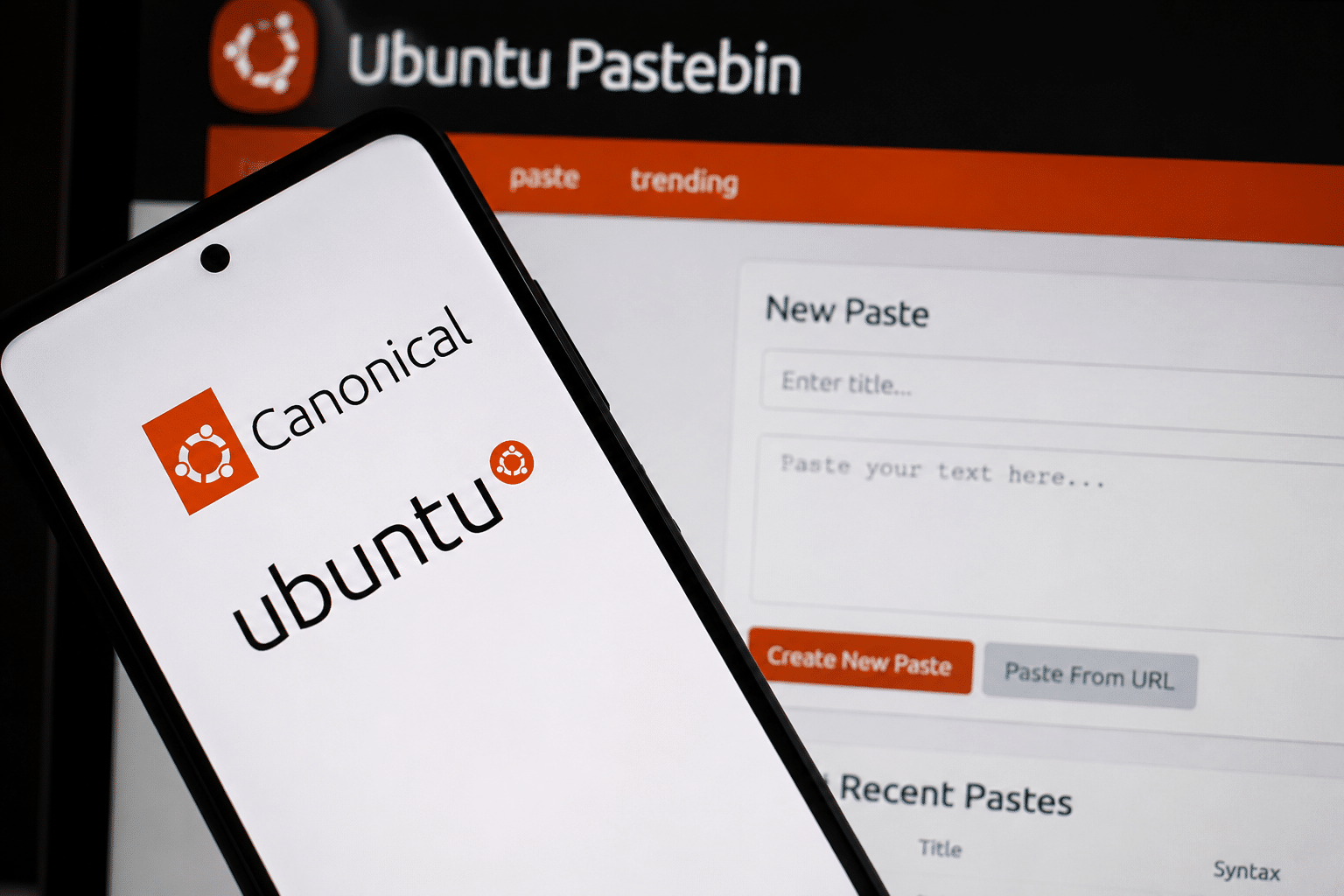
Canonical explained that the shutdown is part of broader infrastructure modernization and migration efforts.
That explanation aligns with major trends affecting almost every technology organization today.
Maintaining public-facing infrastructure services has become increasingly expensive and complicated due to:
- bot abuse
- spam attacks
- AI-generated scraping traffic
- moderation requirements
- security compliance
- operational maintenance
- infrastructure scaling
- legal and privacy concerns
Even simple utilities now require significant backend oversight.
Open-source organizations must increasingly focus their resources on:
- core platform engineering
- cloud infrastructure
- enterprise services
- AI integrations
- security hardening
- developer tooling
- container ecosystems
- automation platforms
Standalone utilities that no longer align with strategic priorities often become difficult to justify operationally.
Canonical’s move reflects the same infrastructure consolidation happening across the broader technology industry.
Linux Infrastructure Has Entered a Cloud-Native Era
The Linux ecosystem of 2026 is fundamentally different from the Linux ecosystem of 2010.
Back then:
- most developers worked locally
- remote work was limited
- VPS adoption was smaller
- cloud infrastructure remained early-stage
- browser-based tooling barely existed
- DevOps culture was still emerging
Today:
- distributed teams are normal
- Kubernetes powers production infrastructure
- CI/CD pipelines run continuously
- cloud-native deployment dominates enterprise IT
- remote administration is essential
- browser-based engineering tools are everywhere
- AI-assisted development is growing rapidly
Infrastructure itself has become programmable, portable, and globally distributed.
As a result, Linux professionals increasingly rely on:
- remote workstations
- cloud servers
- virtual desktops
- browser-accessible environments
- infrastructure automation
- remote deployment pipelines
rather than isolated local machines.
This shift explains why older standalone utilities like Pastebin are becoming less central to modern workflows.
The Rise of Persistent Remote Workspaces
One of the biggest changes in modern Linux operations is the growing importance of persistent remote environments.
Developers no longer want workflows tied to a single physical device.
Instead, they increasingly use:
- cloud-hosted desktops
- remote Linux servers
- Windows RDP systems
- VPS infrastructure
- browser-accessible administration consoles
- persistent DevOps environments
This evolution offers several operational advantages.
1. Device Independence
Remote infrastructure allows users to work from:
- laptops
- tablets
- secondary systems
- low-powered devices
- temporary workstations
without sacrificing access to their primary development environment.
2. Operational Continuity
If local hardware fails, remote systems remain accessible.
That resilience is increasingly important for:
- production engineering
- emergency troubleshooting
- incident response
- remote support
- deployment management
3. Centralized Workflows
Instead of scattering tools across multiple local systems, administrators can centralize:
- SSH access
- dashboards
- deployment pipelines
- cloud consoles
- monitoring systems
- browser automation tools
inside persistent remote environments.
Why Remote Infrastructure Matters More Than Ever
Canonical’s Pastebin shutdown indirectly highlights a much larger operational reality:
Infrastructure resilience now matters more than standalone utilities.
Modern engineering teams prioritize:
- accessibility
- uptime
- scalability
- remote administration
- centralized workflows
- security visibility
- deployment automation
Remote infrastructure solves many of these challenges simultaneously.
A properly configured remote Linux environment enables engineers to:
- manage Kubernetes clusters
- deploy applications
- monitor production systems
- troubleshoot servers
- automate tasks
- run development environments
- access cloud consoles
- maintain CI/CD pipelines
from virtually anywhere.
This flexibility has become critical in remote-first engineering cultures.
How 99RDP Fits Into Modern Linux Operations
As Linux infrastructure evolves toward remote-first workflows, providers like 99RDP are becoming increasingly relevant for developers, businesses, and technical professionals.
The company’s infrastructure services align naturally with the operational needs of modern Linux environments.
Remote Linux Administration
Many Linux administrators require reliable environments for:
- server management
- deployment operations
- infrastructure monitoring
- remote troubleshooting
- cloud administration
Remote desktop solutions simplify access to these workflows without depending entirely on local hardware.
Browser-Centric Engineering
Modern development increasingly revolves around browser-based tools such as:
- GitHub
- GitLab
- cloud dashboards
- Kubernetes interfaces
- AI copilots
- SaaS management platforms
- monitoring systems
A persistent remote desktop environment centralizes these workflows efficiently.
VPS and Cloud Workloads
Remote infrastructure providers help teams deploy scalable environments for:
- testing
- staging
- automation
- remote collaboration
- lightweight production tasks
without requiring expensive local hardware upgrades.
Remote Technical Support
Technical support teams often require isolated environments for:
- diagnostics
- testing
- software reproduction
- Linux troubleshooting
- browser testing
Cloud-hosted remote systems dramatically improve operational flexibility.
Remote Work Permanently Changed Linux Operations
The global rise of remote work accelerated infrastructure modernization across nearly every industry.
Linux professionals increasingly work from:
- home offices
- coworking spaces
- temporary travel locations
- distributed international teams
This transition created demand for:
- secure remote access
- persistent work environments
- centralized administration
- cloud-hosted development systems
The traditional model of maintaining everything locally became less practical.
Remote infrastructure now functions as a productivity backbone for:
- developers
- DevOps engineers
- system administrators
- cybersecurity analysts
- QA testers
- support teams
- freelancers
- agencies
This trend continues accelerating in 2026.
Security Concerns Are Reshaping Infrastructure Decisions
Security is another major reason organizations are consolidating legacy services.
Public-facing utilities create operational risks including:
- spam abuse
- credential leaks
- malicious uploads
- scraping attacks
- automated exploitation
- moderation challenges
As AI-driven automation increases internet traffic volume, maintaining older public utilities becomes harder.
Modern infrastructure strategies increasingly prioritize:
- centralized authentication
- audit logging
- controlled access
- managed environments
- security monitoring
- scalable backend systems
Remote infrastructure providers now compete partly on operational security and reliability rather than simply offering compute resources.
Linux Development Is Becoming Increasingly Browser-Based
Another major trend influencing infrastructure decisions is the rise of browser-centric engineering workflows.
Today, developers often spend most of their day inside:
- browser IDEs
- Git repositories
- SaaS dashboards
- cloud consoles
- AI assistants
- monitoring platforms
- communication tools
This shift reduces dependence on traditional local desktop environments.
Remote workstations now act as centralized operational hubs capable of running:
- browsers
- terminals
- automation tools
- development stacks
- remote sessions
continuously in the cloud.
This operational model pairs naturally with remote infrastructure providers like 99RDP, especially for users seeking accessible, persistent workspaces.
The Future of Linux Infrastructure Is Distributed
Canonical’s Pastebin shutdown represents part of a broader industry transformation: Linux infrastructure is becoming increasingly distributed, cloud-native, and service-oriented.
Future workflows will likely revolve around:
- remote development environments
- AI-assisted operations
- browser-based engineering
- infrastructure-as-code
- centralized remote administration
- globally distributed systems
Developers increasingly expect:
- instant access
- persistent sessions
- portable environments
- device flexibility
- scalable resources
Infrastructure providers capable of supporting these workflows will become more important over time.
AI and Automation Are Accelerating Infrastructure Evolution
AI tools are also reshaping Linux operations dramatically.
Modern infrastructure teams increasingly use AI for:
- log analysis
- deployment recommendations
- monitoring insights
- troubleshooting assistance
- code generation
- automation scripting
These workflows require scalable environments capable of handling:
- browser sessions
- cloud APIs
- automation tools
- large development stacks
Remote cloud-hosted workspaces support this evolution more effectively than many traditional local setups.
As AI adoption grows, infrastructure centralization will likely increase further.
Open Source Communities Are Adapting to New Operational Realities
The shutdown of Ubuntu Pastebin does not indicate weakness in Linux or open source.
Instead, it demonstrates maturity.
The ecosystem is evolving toward:
- scalable platforms
- sustainable infrastructure
- cloud-native tooling
- managed environments
- enterprise-grade operational models
Open-source communities increasingly prioritize:
- security
- sustainability
- maintainability
- infrastructure resilience
rather than maintaining every historical utility indefinitely.
That evolution is necessary as Linux adoption expands across:
- enterprises
- cloud providers
- AI infrastructure
- cybersecurity operations
- edge computing
- DevOps ecosystems
Why Flexible Infrastructure Is Becoming a Competitive Advantage
Businesses increasingly compete based on operational agility.
Teams capable of deploying infrastructure quickly gain advantages in:
- development speed
- support responsiveness
- deployment flexibility
- remote collaboration
- incident recovery
- automation scaling
Remote infrastructure providers contribute directly to these operational capabilities.
Instead of spending time maintaining local complexity, engineers can focus on:
- shipping software
- scaling systems
- automating workflows
- supporting users
- improving uptime
This operational efficiency is becoming strategically important across industries.
Linux Professionals Need Infrastructure That Moves With Them
Modern engineering workflows no longer happen in one fixed location.
Professionals increasingly operate across:
- multiple devices
- cloud platforms
- remote teams
- hybrid work environments
- distributed infrastructure systems
As a result, infrastructure portability matters more than ever.
Persistent remote environments allow engineers to:
- continue work instantly
- maintain consistent tooling
- preserve sessions
- reduce local dependency
- simplify collaboration
These operational benefits explain why remote infrastructure adoption continues growing.
Final Thoughts
Canonical’s decision to shut down Ubuntu Pastebin may appear minor on the surface, but it reflects a much deeper transformation happening throughout the Linux ecosystem.
The future of Linux infrastructure is:
- remote-first
- cloud-native
- automation-driven
- browser-centric
- security-focused
- globally distributed
Legacy standalone utilities are gradually giving way to integrated infrastructure environments capable of supporting modern operational demands.
At the same time, remote infrastructure platforms are becoming foundational tools for developers, system administrators, DevOps teams, and remote technical professionals.
Providers like 99RDP fit naturally into this transition by helping users maintain accessible remote environments for administration, development, testing, monitoring, and cloud-based workflows.
Ubuntu Pastebin’s shutdown is not the end of Linux collaboration.
It is part of Linux’s next evolution.
And that evolution increasingly revolves around resilient infrastructure, persistent remote environments, and globally accessible operational workflows designed for the modern internet era.
EXPLORE MORE ; What Ubuntu ‘s 26.04 Yaru Icons System Means for Developers

READ OUR BLOGS


