FreeBSD : Why This Unix-Based Powerhouse Still Dominates Servers
In a world dominated by Linux and Windows servers, FreeBSD quietly powers some of the most demanding infrastructures in the world — from Netflix’s Open Connect CDN to massive data centers, enterprise firewalls, storage systems, and ultra-reliable hosting platforms. Developers trust it. Enterprises depend on it. And system administrators choose it when they want an OS that simply does not break.
In this detailed, data-driven guide, we break down what FreeBSD is, why it remains a top choice for performance-critical workloads, and how combining FreeBSD with 99RDP’s high-performance VPS/RDP hosting can unlock even greater reliability, efficiency, and scalability.
What is FreeBSD?

FreeBSD is an advanced, open-source Unix-like operating system developed from the original BSD (Berkeley Software Distribution) code. Unlike Linux — which bundles a kernel with third-party user-space tools — FreeBSD delivers a complete operating system maintained by a single core engineering team.
This unified design gives FreeBSD:
- Better stability
- Consistent updates
- Predictable performance
- Deep system control
- Enterprise-grade reliability
This is why FreeBSD is widely deployed in:
- High-performance servers
- Storage appliances
- Routers and firewalls
- Hosting environments
- Cloud infrastructures
- Research and educational systems
Why FreeBSD is Still a Top-Tier Server Operating System
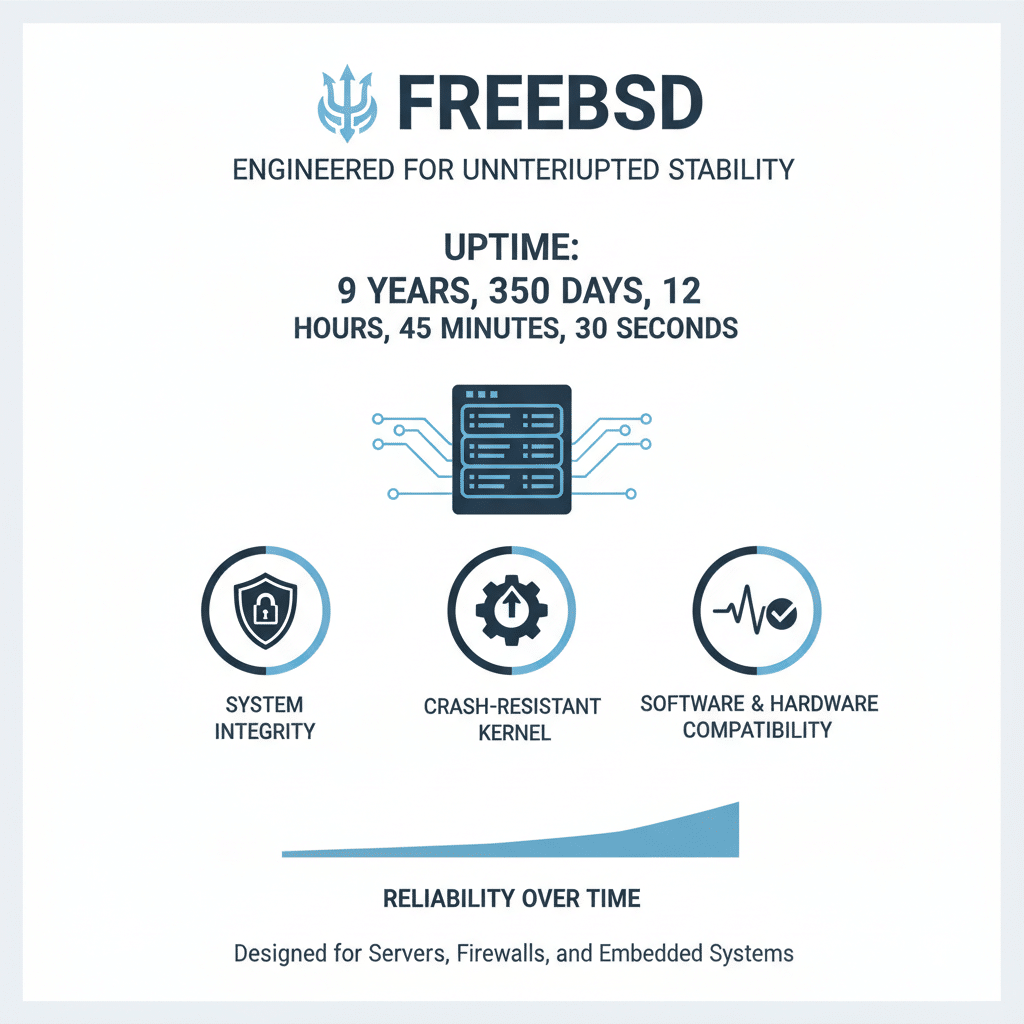
1. Exceptional Stability and 24/7 Reliability
FreeBSD is engineered to run non-stop — even for years — without crashing.
Its mature memory management, optimized threading model, and consistent user-land environment help ensure:
- Near-zero downtime
- Reliable I/O performance
- Predictable resource usage
- Safer kernel upgrades
This makes FreeBSD ideal for web servers, database servers, CDNs, and storage environments where stability is non-negotiable.
2. Powerful Filesystem: ZFS Support Out of the Box
FreeBSD is famous for its native support of the ZFS filesystem, widely recognized as one of the safest and most advanced filesystems ever created.
Key ZFS Benefits:
- End-to-end checksums for data integrity
- Snapshots and clones for fast backups
- Built-in compression & deduplication
- Self-healing capabilities
- Scalable storage pools
- RAID-Z (advanced RAID levels)
When paired with a powerful remote server (like a 99RDP NVMe VPS), ZFS turns your infrastructure into a robust, high-availability environment for databases, file servers, and backup systems.
3. Superior Networking Performance
FreeBSD’s TCP/IP stack is one of the most optimized in the world — originally developed at UC Berkeley, and still refined today for massive throughput and low latency.
Developers prefer it for:
- High-traffic web servers
- VPN gateways
- BGP/OSPF routing
- Load balancers
- Proxy servers
- DNS servers
This is exactly why major companies like Netflix built their CDN infrastructure using FreeBSD — to push petabytes of data with minimal overhead.
4. Lightweight, Secure Virtualization (Jails + VNET)
FreeBSD introduced jails long before Docker containers became popular.
With jails, you can:
- Create isolated environments
- Run multiple apps independently
- Assign separate filesystem, networking, and user controls
- Enhance security with minimal overhead
Using jails on a scalable VPS from 99RDP helps developers host:
- Multiple websites
- Secure testing environments
- Staging servers
- Multi-tenant apps
- Sandboxed development environments
Jails give you Docker-like flexibility without the complexity.
5. Better Security Through a Minimal, Audit-Friendly Base System
FreeBSD includes:
- Mandatory Access Controls (MAC)
- Built-in firewalls (PF, IPFW)
- Secure kernel modules
- Strong SSH defaults
- Fewer background services (lower attack surface)
- Optional TrustedBSD framework
This makes FreeBSD a preferred OS in environments where security and trust are top priorities — such as banking systems, firewalls, VPN servers, and core network appliances.
6. Massive Software Availability (Ports Collection)
FreeBSD’s Ports Collection includes 40,000+ pre-compiled applications, ranging from:
- Web servers (Nginx, Apache)
- Database systems (MySQL, PostgreSQL, MariaDB)
- Developer tools (Golang, Rust, Python, PHP)
- Networking tools
- Firewalls
- Monitoring systems
- Desktop environments
You can compile software specifically optimized for your hardware — giving unmatched customization freedom.
Where FreeBSD is Used (Practical Applications)
FreeBSD performs exceptionally well in:
✔ High-Performance Web Hosting
Efficient TCP stack + ZFS + stable kernel = elite hosting experience.
✔ VPN Gateways
FreeBSD’s PF firewall and secure networking make it perfect for OpenVPN or WireGuard servers.
✔ Storage Servers
ZFS + RAID-Z makes FreeBSD perfect for NAS, backups, and enterprise data storage.
✔ Data Centers & Cloud Infrastructure
Because it runs for months or years without reboot.
✔ Development & Testing Environments
Through lightweight jails and Linux binary compatibility.
✔ Embedded & Networking Devices
Many routers and appliances run FreeBSD due to its lightweight footprint.
Why FreeBSD Performs Even Better on 99RDP’s Infrastructure
FreeBSD is powerful — but it reaches its full potential only when deployed on modern, fast, and stable servers. This is where 99RDP stands out.
Below is how FreeBSD and 99RDP combine into an unbeatable pair:
1. High-Performance NVMe Storage for ZFS
FreeBSD’s ZFS performs best on fast NVMe storage.
99RDP’s NVMe RDP/VPS plans give you:
- Faster read/write speeds
- Higher IOPS
- Better latency
- Reliable snapshot handling
This makes your FreeBSD storage server or database significantly faster and more efficient.
2. Guaranteed Dedicated Resources
Unlike cheap shared hosting, 99RDP offers:
- Dedicated CPU
- Guaranteed RAM
- Independent storage
- Zero noisy-neighbor issues
This is essential for running jails, databases, or high-traffic servers on FreeBSD.
3. Ultra-Stable Uptime for 24/7 Services
FreeBSD itself is incredibly stable — but it needs a reliable remote server to shine.
99RDP provides:
- Enterprise-grade uptime
- Stable networking
- Secure datacenter infrastructure
This ensures your FreeBSD workloads run non-stop and without interruption.
4. Full Root Access + Custom ISO Support
99RDP allows you to install FreeBSD customized exactly the way you want:
- Custom filesystem layout
- ZFS tuning
- Kernel configurations
- Jail isolation setup
- Developer tool installations
This level of control is a dream for system administrators and developers.
5. Perfect for Developers, Businesses & Professionals
FreeBSD on 99RDP is ideal for:
- Software development
- Database hosting
- Secure VPN setup
- File servers
- Cloud apps
- Production hosting
- DevOps testing labs
You get raw performance + total control + security — everything serious professionals want.
FreeBSD + 99RDP = A Future-Proof, High-Performance Infrastructure
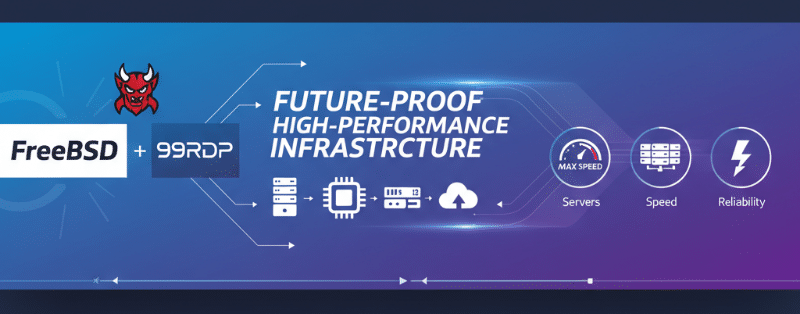
FreeBSD remains one of the most stable, secure, and high-performance operating systems in existence — a true veteran powering some of the Internet’s biggest platforms. Its strengths in networking, storage, virtualization, and reliability make it an unbeatable choice for developers and businesses.
When combined with 99RDP’s premium NVMe servers, dedicated resources, stable datacenter performance, and full customization support, it evolves into a powerful backbone for any modern infrastructure.
If you want an OS that stays fast, secure, stable, and reliable —
FreeBSD + 99RDP is one of the best combinations you can choose.
EXPLORE MORE ; What is VPS Server? All you need to know about VPS
READ OUR BLOGS