
Why Smart Developers Are Pairing RP2040 Boards with Cloud RDP Servers

The developer ecosystem is undergoing a quiet but powerful shift. Instead of relying solely on bulky single-board computers or expensive local machines, smart developers are building hybrid architectures—combining ultra-efficient microcontrollers with scalable cloud infrastructure.
At the center of this trend sits the RP2040 microcontroller, paired with remote desktop environments delivered via cloud RDP servers.
This isn’t just a clever hack. It’s a data-driven, performance-focused strategy that optimizes cost, speed, and scalability.
Let’s break down exactly why this pairing works—and why it’s becoming the go-to architecture for modern developers.
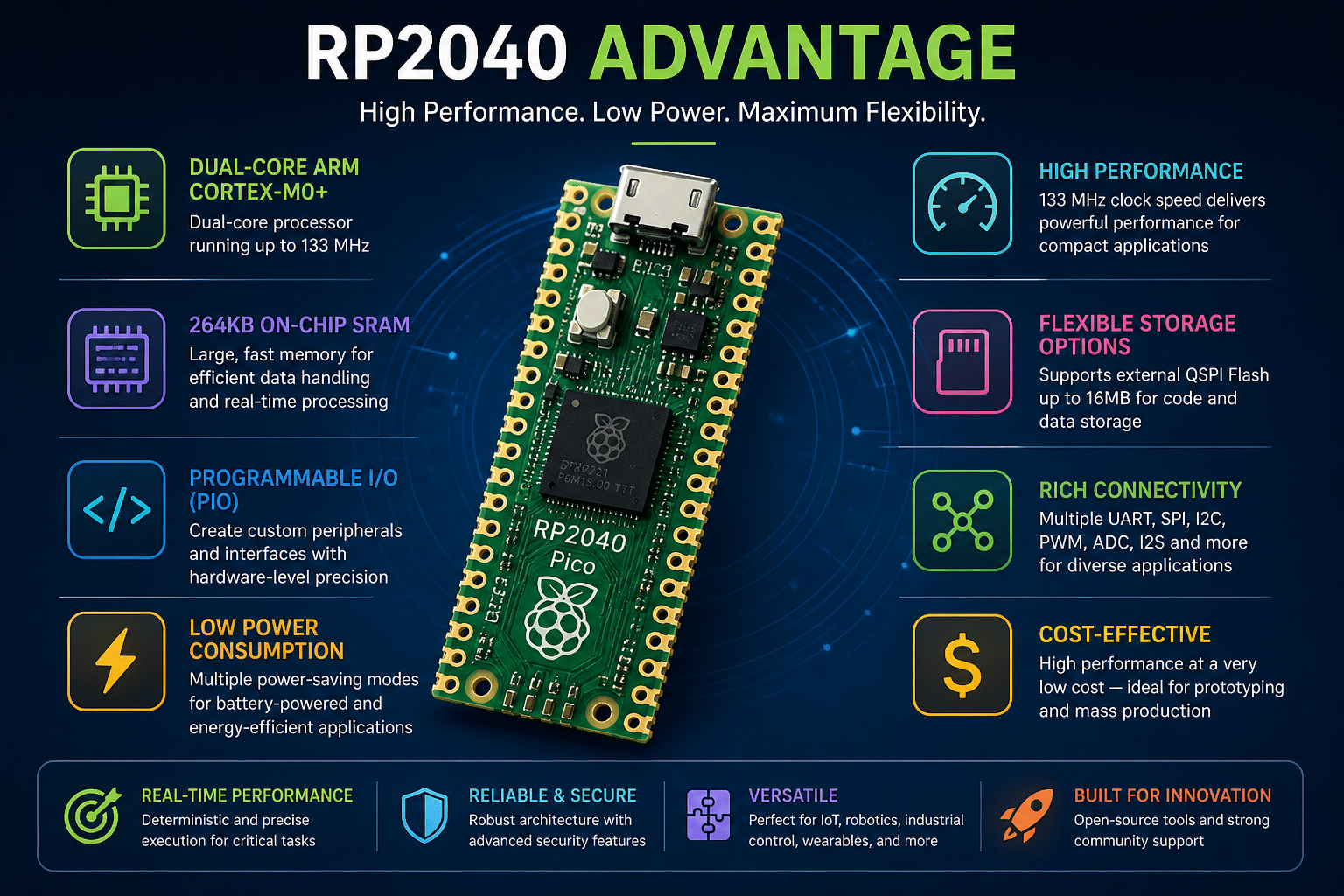
1. Understanding the RP2040 Advantage
The Raspberry Pi Pico introduced developers to a new level of efficiency in embedded computing.
Key Technical Highlights:
- Dual-core ARM Cortex-M0+ @ 133 MHz
- 264 KB on-chip SRAM
- Deterministic execution (no OS overhead)
- Programmable I/O (PIO) subsystem
Unlike traditional Raspberry Pi boards, RP2040-based systems operate without a full operating system. This allows:
- Microsecond-level timing precision
- Extremely low power consumption
- Reliable real-time execution
In short: RP2040 excels at control, not computation.
2. The Limitation: Where RP2040 Falls Short
While powerful in its domain, RP2040 has clear constraints:
Limited Memory
- Only 264 KB SRAM
- External flash required for storage
No Native OS
- No multitasking environment
- No built-in networking stack (in most boards)
Not Built for Heavy Workloads
- No support for:
- AI/ML processing
- Large-scale data analytics
- Complex simulations
This creates a bottleneck when projects grow beyond embedded logic.
3. Enter Cloud RDP Servers: The Missing Piece
Cloud RDP (Remote Desktop Protocol) servers provide full-fledged computing environments accessible from anywhere.
Popular platforms like Microsoft Remote Desktop allow developers to connect to powerful remote machines with:
- High CPU and RAM
- GPU acceleration (optional)
- Persistent storage
- Full OS environments (Windows/Linux)
4. The Hybrid Architecture: Edge + Cloud
Smart developers are now designing systems like this:
[ RP2040 Device ]  →  [ API / Network ]  →  [ Cloud RDP Server ]
   (Edge)                                       (Compute)
Division of Responsibilities:
RP2040 Handles:
- Sensor data collection
- Real-time control
- Hardware interfacing
Cloud RDP Handles:
- Data processing
- Visualization
- Machine learning
- Development environments
This separation creates a clean, scalable architecture.
5. Data-Driven Benefits of This Approach
A. Performance Optimization
- RP2040 executes tasks with zero OS latency
- Cloud servers handle parallel, heavy workloads
Result: Faster execution across the system
B. Cost Efficiency
Traditional Setup:
- High-end laptop/desktop: ₹80,000+
- Raspberry Pi SBC cluster: Expensive scaling
Hybrid Setup:
- RP2040 board: ~₹300–₹500
- Cloud RDP subscription: Pay-as-you-go
Developers reduce upfront cost while scaling infinitely.
C. Energy Efficiency
- RP2040 consumes milliwatts
- Cloud servers optimize power centrally
Ideal for:
- IoT deployments
- Battery-powered systems
D. Remote Accessibility
With RDP:
- Access development environment from anywhere
- Monitor devices in real-time
- Debug systems remotely
This is critical for distributed teams.
Real-World Use Cases
1. IoT Monitoring Systems
Workflow:
- RP2040 collects sensor data
- Sends to cloud server
- RDP environment visualizes dashboards
Example:
- Smart agriculture
- Industrial monitoring
2. Robotics and Automation
- RP2040 controls motors and sensors
- Cloud handles:
- Path planning
- AI decision-making
This reduces onboard complexity.
3. Embedded AI Systems
- RP2040 handles input/output
- Cloud runs ML models
Enables:
- Image recognition
- Predictive analytics
4. Remote Development Labs
Students and developers:
- Use RP2040 hardware locally
- Access powerful IDEs via cloud RDP
No need for expensive laptops.
Why Developers Are Choosing 99RDP
Platforms like 99RDP are gaining traction because they align perfectly with this hybrid model.
Key Advantages:
High-Performance Remote Machines
- Dedicated CPU & RAM
- Smooth development experience
Affordable Pricing
- Budget-friendly plans
- Ideal for students and startups
Instant Setup
- Ready-to-use environments
- No complex configuration
24/7 Accessibility
- Access your workspace anytime
- Work from low-end devices
Scalability
- Upgrade resources as needed
- No hardware limitations
Strategic Integration Points
Here’s how you can intelligently integrate 99RDP into your workflow:
🔹 During Development Phase
- Write and compile code on 99RDP
- Flash firmware to RP2040
Faster builds, smoother workflow
🔹 During Deployment
- Use cloud server for:
- Logging
- Monitoring
- OTA updates
🔹 During Scaling
- Add more RP2040 devices
- Scale backend via 99RDP
No infrastructure bottleneck
🔹 During Maintenance
- Debug remotely via RDP
- Analyze logs centrally
Performance Comparison: Traditional vs Hybrid
| Metric | Traditional SBC Setup | RP2040 + Cloud RDP |
|---|---|---|
| Latency (Control) | Medium | Ultra-low |
| Compute Power | Limited | Scalable |
| Cost | High upfront | Low + flexible |
| Power Usage | High | Low |
| Scalability | Limited | Infinite |
Future Trends
The industry is moving toward:
Edge-Cloud Integration
- Devices handle local tasks
- Cloud handles intelligence
AI at the Edge
- Lightweight inference locally
- Training in the cloud
Distributed Systems
- Multiple RP2040 nodes
- Centralized cloud control
Cloud-First Development
- Developers rely less on local machines
- More on remote environments
Best Practices for Developers
To maximize this setup:
✔ Optimize Communication
- Use lightweight protocols (MQTT, HTTP)
✔ Secure Your Pipeline
- Encrypt data
- Use authentication
✔ Modularize Your System
- Separate edge and cloud logic
✔ Monitor Continuously
- Use logs and dashboards
Final Thoughts
The combination of RP2040 microcontroller and cloud RDP servers isn’t just a trend—it’s a strategic evolution in computing.
Smart developers are embracing this model because it delivers:
- Real-time performance
- Cost efficiency
- Unlimited scalability
- Remote accessibility
By integrating platforms like 99RDP, developers unlock a powerful workflow that bridges the gap between hardware precision and cloud intelligence.
The future doesn’t belong to standalone devices.
It belongs to connected, hybrid systems.
EXPLORE MORE ; Why Raspberry Pi 5 Is a Game-Changer for Xibo
READ OUR BLOGS


