Alpine Linux 3.24 Brings GNOME 50 and KDE Plasma 6.6: A Major Upgrade for Developers, Sysadmins, and Cloud Infrastructure

The Alpine Linux project continues to prove that lightweight doesn’t mean limited. With the release of Alpine Linux 3.24, users gain access to GNOME 50, KDE Plasma 6.6, COSMIC desktop packages, Linux kernel 6.18 LTS, and a refreshed developer toolchain that includes the latest versions of Rust, Go, Python, Node.js, and more.
For years, Alpine Linux has been known as the operating system behind countless Docker containers, Kubernetes deployments, and cloud-native workloads. However, Alpine Linux 3.24 demonstrates that the distribution is evolving far beyond its minimalist roots. It is becoming a complete ecosystem capable of powering everything from microservices and VPS servers to modern desktop environments and remote workstations.
For developers, DevOps engineers, cloud architects, and businesses looking to maximize infrastructure efficiency, Alpine Linux 3.24 is one of the most exciting Linux releases of the year.
What Is Alpine Linux?
Alpine Linux is an independent Linux distribution designed around three core principles:
- Simplicity
- Security
- Resource efficiency
Unlike traditional Linux distributions, Alpine uses:
- musl libc instead of glibc
- BusyBox for core utilities
- OpenRC instead of systemd
- A minimal package footprint
These architectural choices allow Alpine Linux to maintain an extremely small installation size while delivering excellent performance and strong security.
Today, Alpine Linux is widely used for:
- Docker containers
- Kubernetes clusters
- Cloud infrastructure
- Virtual private servers
- Embedded systems
- Development environments
- Security-focused deployments
The distribution has become one of the most downloaded Linux container images globally because organizations increasingly prioritize lightweight and secure operating systems.
What’s New in Alpine Linux 3.24?
The latest release introduces substantial upgrades across desktops, development tools, kernels, and infrastructure components .
Key highlights include:
- GNOME 50 desktop environment
- KDE Plasma 6.6 desktop environment
- COSMIC desktop packages
- Linux Kernel 6.18 LTS
- LLVM 22
- Rust 1.96
- Go 1.26
- Node.js 24 LTS
- Python 3.14
- Qt 6.11
- OpenJDK 25
These upgrades significantly modernize Alpine’s ecosystem while preserving the lightweight philosophy that made the distribution popular.
GNOME 50 Arrives on Alpine Linux
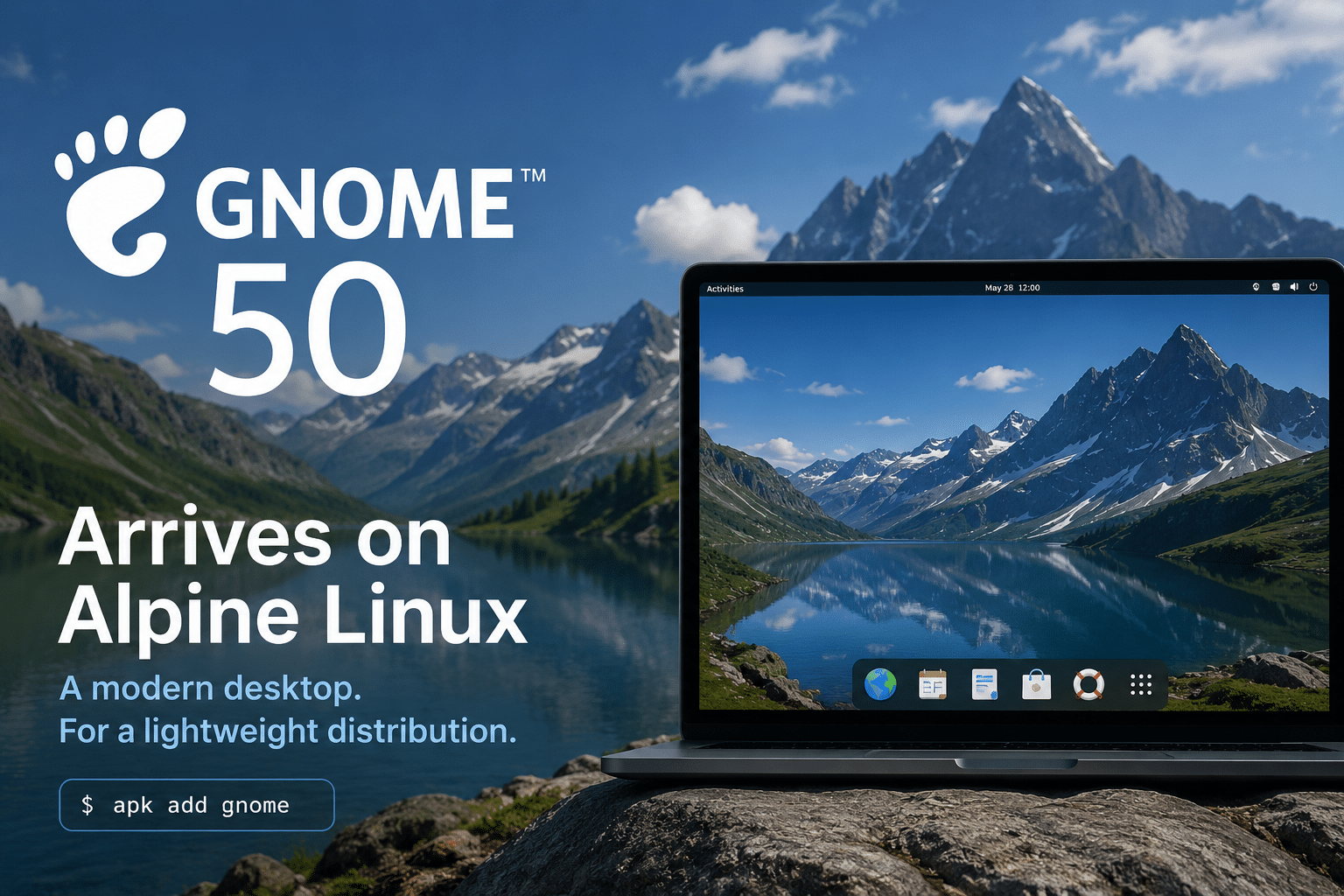
One of the biggest attractions of Alpine Linux 3.24 is the inclusion of GNOME 50.
GNOME remains one of the most widely used desktop environments in the Linux ecosystem and powers major distributions such as Fedora and Ubuntu.
Key GNOME 50 Improvements
Users can expect:
- Better performance optimization
- Enhanced accessibility features
- Improved file management
- Refined user interface elements
- Better Wayland integration
- Improved responsiveness
The GNOME project has consistently focused on streamlining the desktop experience while improving productivity and usability.
For Alpine Linux users, GNOME 50 transforms the distribution into a more capable desktop platform without sacrificing efficiency.
Why This Matters
Organizations deploying Linux desktop environments can now benefit from:
- Lower hardware requirements
- Faster boot times
- Better resource utilization
- Modern user experiences
- Reduced operational costs
The combination of Alpine Linux and GNOME 50 creates an excellent environment for developers and remote workers alike.
KDE Plasma 6.6 Brings Enhanced Customization
The KDE Plasma desktop continues to evolve into one of the most powerful desktop environments available for Linux.
Alpine Linux 3.24 now includes KDE Plasma 6.6, bringing users access to the latest KDE technologies.
Plasma 6.6 Features
Notable improvements include:
- Enhanced Wayland support
- Better graphics performance
- Improved power management
- More responsive desktop interactions
- Refined user interface consistency
- Improved multi-monitor support
KDE Plasma has gained popularity because it combines modern aesthetics with exceptional flexibility.
Unlike many desktop environments, Plasma allows users to customize nearly every aspect of the interface.
This flexibility makes it particularly attractive for:
- Developers
- Power users
- Engineers
- Remote desktop users
- Enterprise workstations
COSMIC Desktop Packages Join Alpine Linux

Another noteworthy addition to Alpine Linux 3.24 is support for COSMIC desktop packages.
COSMIC is the next-generation desktop environment being developed by System76.
Unlike traditional desktop environments, COSMIC is built using Rust and designed with modern Linux workflows in mind.
Why COSMIC Is Important
COSMIC introduces:
- Rust-powered architecture
- Modern Wayland support
- Independent desktop stack
- Modular design philosophy
- High-performance rendering
Many industry experts consider COSMIC one of the most promising desktop projects currently under development.
By including COSMIC packages, Alpine Linux positions itself at the forefront of Linux desktop innovation.
Linux Kernel 6.18 LTS Strengthens Stability
Kernel upgrades often determine the long-term reliability of a Linux distribution.
Alpine Linux 3.24 ships with Linux Kernel 6.18 LTS, providing:
- Long-term support
- Improved hardware compatibility
- Better filesystem performance
- Enhanced networking capabilities
- Security improvements
- Performance optimizations
For production workloads, LTS kernels remain the preferred choice because they receive security and maintenance updates for extended periods.
This makes Alpine Linux 3.24 particularly attractive for:
- VPS hosting
- Cloud deployments
- Enterprise servers
- Development platforms
- Kubernetes nodes
Major Toolchain Upgrades for Developers
Modern software development depends on current programming languages and frameworks.
Alpine Linux 3.24 delivers a significant refresh of its development stack.
Updated Components
Rust 1.96
Rust continues to gain momentum across the software industry.
Benefits include:
- Memory safety
- High performance
- Strong concurrency support
- Reduced security vulnerabilities
Rust powers many modern infrastructure projects including:
- COSMIC Desktop
- Cloud-native applications
- Security tools
- High-performance services
Go 1.26
Go remains a favorite language for cloud-native development.
Popular technologies built with Go include:
- Docker
- Kubernetes
- Terraform
- Prometheus
Python 3.14
Python remains the dominant language for:
- AI development
- Machine learning
- Automation
- Data science
- Web applications
Node.js 24 LTS
JavaScript developers gain access to:
- Long-term support
- Better performance
- Enhanced stability
- Improved runtime capabilities
OpenJDK 25
Java developers benefit from:
- Modern language features
- Improved JVM performance
- Enterprise-grade stability
These updates make Alpine Linux 3.24 an attractive platform for modern software development.
Why Alpine Linux Dominates Container Infrastructure
One of Alpine Linux’s greatest success stories is its dominance within the container ecosystem.
Smaller Images
Traditional Linux container images can consume hundreds of megabytes.
Alpine-based containers often remain dramatically smaller.
Benefits include:
- Faster downloads
- Reduced storage usage
- Lower bandwidth costs
- Quicker deployments
Better Security
Smaller images often mean:
- Fewer packages
- Reduced attack surfaces
- Lower vulnerability exposure
Faster CI/CD Pipelines
Development teams benefit from:
- Faster builds
- Reduced deployment times
- More efficient infrastructure
As organizations increasingly adopt containerized applications, Alpine Linux continues to gain strategic importance.
Alpine Linux 3.24 for VPS Hosting
Virtual Private Servers remain one of the most common deployment environments for Linux workloads.
Alpine Linux offers several advantages in VPS environments.
Resource Efficiency
Because Alpine requires fewer resources:
- More RAM remains available for applications
- CPU overhead decreases
- Storage requirements shrink
Faster Provisioning
Lightweight systems enable:
- Quicker deployments
- Faster boot cycles
- More responsive environments
Lower Operating Costs
Businesses can maximize server density and improve infrastructure efficiency.
This becomes particularly important as cloud pricing continues to rise.
Why Developers Are Choosing Lightweight Infrastructure
Modern infrastructure trends increasingly favor efficiency over excess.
Organizations now prioritize:
- Resource optimization
- Cost reduction
- Scalability
- Security
- Automation
Alpine Linux aligns perfectly with these goals.
Instead of consuming unnecessary resources, Alpine allocates computing power where it matters most—your applications.
Alpine Linux and Remote Desktop Deployments
Historically, Alpine Linux was viewed primarily as a server operating system.
The addition of GNOME 50, KDE Plasma 6.6, and COSMIC changes that perception.
Today, Alpine can support:
- Remote development workstations
- Virtual desktops
- Cloud-based engineering environments
- Linux training labs
- Testing platforms
This creates new opportunities for businesses looking to deploy lightweight desktop infrastructure.
How 99RDP Complements Alpine Linux Deployments
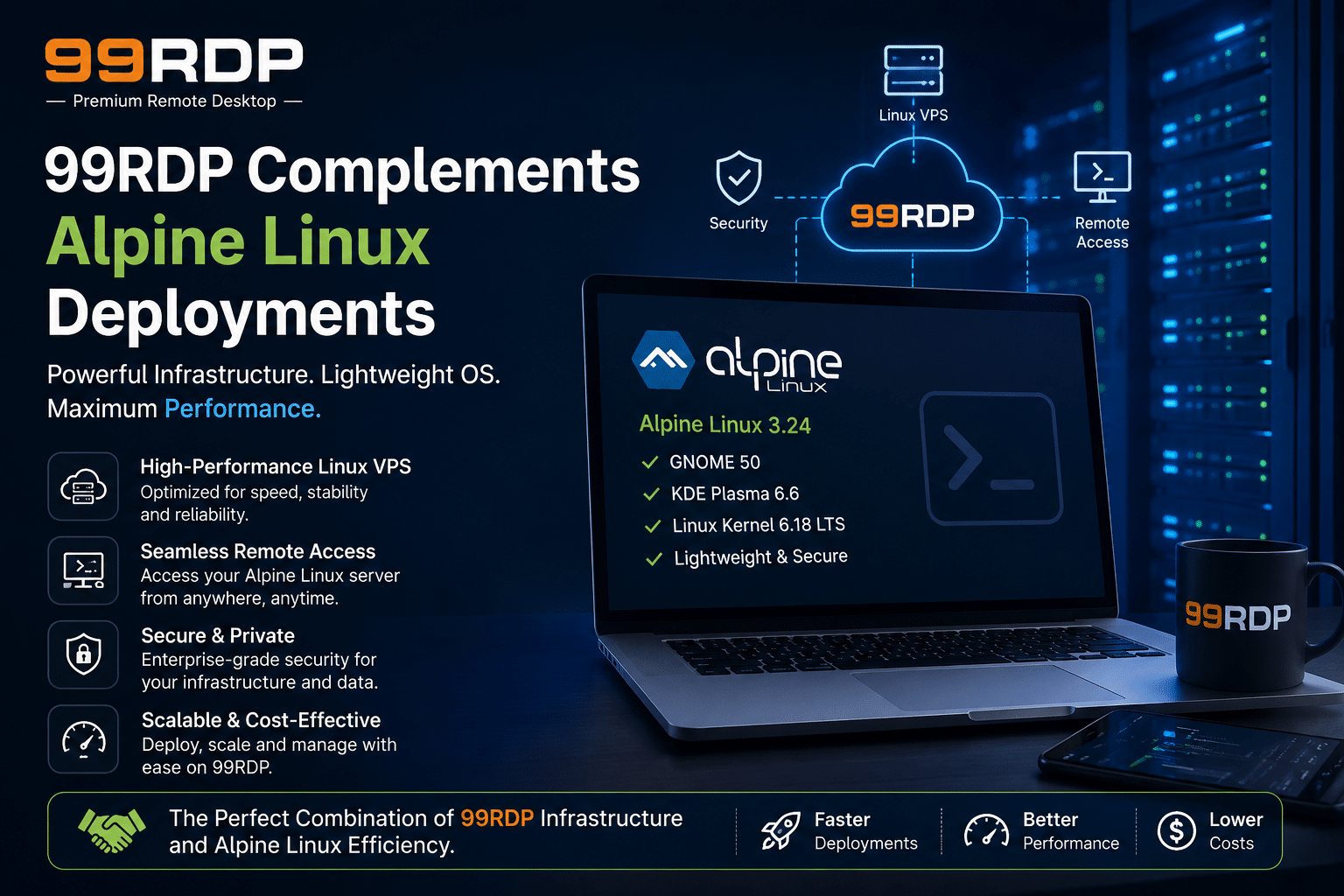
While Alpine Linux provides an efficient operating system foundation, organizations still require reliable infrastructure to unlock its full potential.
This is where 99RDP becomes valuable.
Linux VPS Solutions
99RDP Linux VPS hosting enables businesses to:
- Deploy Alpine Linux rapidly
- Run development environments
- Host applications efficiently
- Build containerized platforms
- Launch cloud-native workloads
Because Alpine consumes fewer resources, organizations can achieve greater performance from their VPS environments.
Remote Desktop Infrastructure
The addition of GNOME 50 and KDE Plasma 6.6 makes Alpine Linux increasingly suitable for remote desktop deployments.
Using 99RDP remote desktop services, teams can:
- Access Linux environments from anywhere
- Build cloud workstations
- Create development labs
- Support distributed teams
This combination delivers flexibility without requiring expensive hardware investments.
Cost-Efficient Scaling
Businesses seeking to scale infrastructure often face rising cloud costs.
Combining Alpine Linux with 99RDP infrastructure helps organizations:
- Reduce resource consumption
- Improve server utilization
- Lower operating expenses
- Increase deployment efficiency
For startups, developers, agencies, and enterprise teams, these benefits can produce meaningful long-term savings.
Alpine Linux vs Traditional Linux Distributions
Alpine Linux Advantages
- Smaller footprint
- Faster boot times
- Better container support
- Strong security model
- Lower resource usage
- Excellent cloud efficiency
Traditional Distribution Advantages
- Larger software repositories
- Broader compatibility
- Easier desktop onboarding
- More beginner-friendly defaults
However, Alpine Linux 3.24 narrows the desktop gap considerably thanks to GNOME 50 and KDE Plasma 6.6.
Who Should Upgrade to Alpine Linux 3.24?
This release is particularly valuable for:
Developers
Because of:
- Updated toolchains
- Better desktop support
- Faster development environments
DevOps Teams
Because of:
- Container efficiency
- Kubernetes compatibility
- Infrastructure optimization
VPS Users
Because of:
- Reduced resource consumption
- Improved performance
- Lower operational costs
Security Professionals
Because of:
- Minimal attack surface
- Security-first design
- Lightweight architecture
Businesses
Because of:
- Better resource utilization
- Cost savings
- Improved scalability
Final Thoughts
Alpine Linux 3.24 represents one of the most important updates in the distribution’s history.
The inclusion of GNOME 50, KDE Plasma 6.6, COSMIC desktop packages, Linux Kernel 6.18 LTS, and a thoroughly modernized development stack demonstrates that Alpine Linux is evolving far beyond its traditional role as a minimal server operating system.
Today, Alpine Linux is equally capable of powering:
- Containers
- Kubernetes clusters
- VPS servers
- Development workstations
- Remote desktop environments
- Enterprise infrastructure
For organizations focused on performance, efficiency, and security, Alpine Linux 3.24 delivers a compelling platform for modern computing.
When paired with high-performance Linux VPS and remote desktop solutions from 99RDP, businesses can build scalable, cost-effective infrastructure that maximizes every CPU cycle, every gigabyte of memory, and every dollar spent on hosting.
As cloud-native technologies continue to dominate the industry, Alpine Linux remains one of the smartest choices for developers and businesses seeking a lightweight yet powerful operating system for the future.
EXPLORE MORE ; Linux Lite 8.0 vs Ubuntu 26.04 LTS
READ OUR BLOGS