
At the end of 2024, we picked six Linux distributions we expected to shape 2025. Some delivered big releases, some are still in development, and a few new names became popular along the way. This updated guide looks at what happened to each of those six, where they stand at the end of 2026, which one fits which kind of user, and which distributions make the most sense on servers and VPS.
Quick answerThe biggest stories were Pop!_OS 24.04 shipping the new Rust-based COSMIC desktop, Ubuntu moving to a Wayland-only GNOME desktop in 26.04 LTS, Fedora continuing its six-month cycle with Fedora 45, and Zorin OS 18 attracting Windows 10 users. KDE Linux and GNOME OS are still works in progress. For servers, stick with Ubuntu LTS, Debian, Rocky Linux or AlmaLinux.
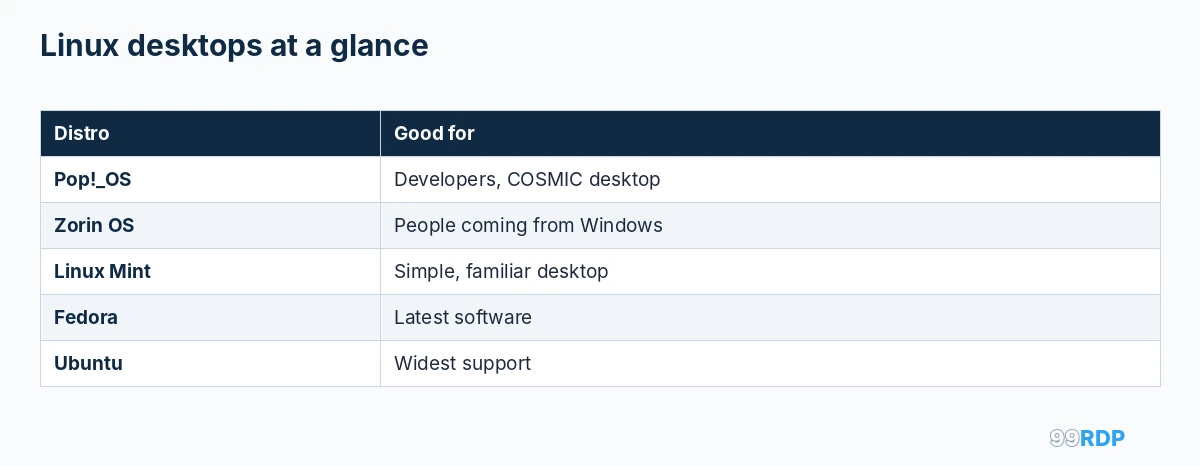
1. Pop!_OS 24.04 LTS (COSMIC)
What we expected: System76's long-awaited move to Ubuntu 24.04 and its own desktop environment, COSMIC, written from scratch in Rust.
What happened: Pop!_OS 24.04 LTS with the COSMIC desktop became stable in late 2025, and COSMIC has kept improving through 2026. It offers built-in tiling, a fast, modern interface and separate ISOs for NVIDIA graphics. COSMIC is now also packaged for Fedora, Arch and other distributions.
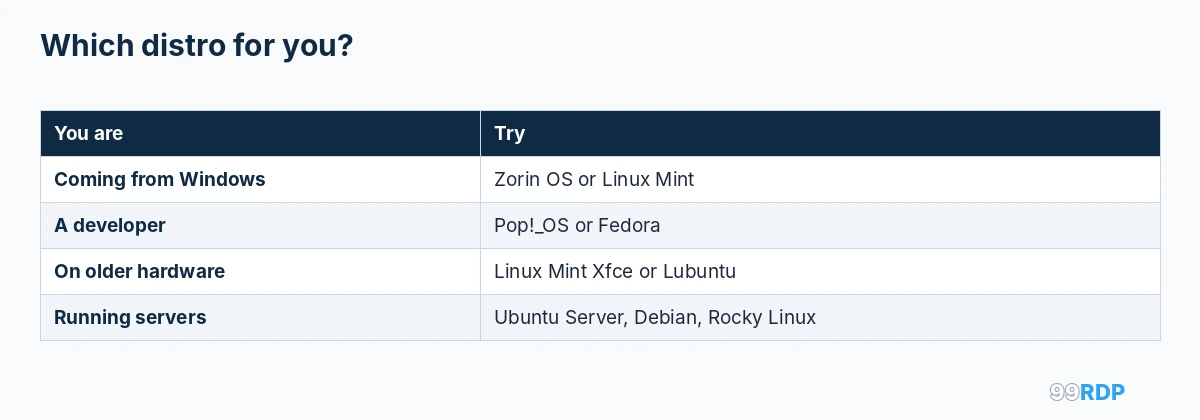
Best for: developers, people with NVIDIA or hybrid-graphics laptops, and anyone who likes tiling windows without configuring a tiling window manager.
2. KDE Linux
What we expected: an official operating system from the KDE project, built as an immutable (image-based) system showcasing the latest Plasma desktop.
What happened: KDE Linux reached its alpha milestone in September 2025 and has been working towards a beta release throughout 2026. It is based on Arch Linux packages, updates as a complete image that can be rolled back, and installs apps from Flathub. It is aimed at testers and enthusiasts for now rather than everyday users.
Best for: KDE fans who want to test the newest Plasma and help shape the project.
3. GNOME OS
What we expected: GNOME's own reference OS growing from a testing tool into something people can run every day.
What happened: GNOME OS remains mainly a development and testing platform with nightly builds. It is a useful way to try upcoming GNOME releases in a virtual machine, but not yet a mainstream desktop choice.
Best for: GNOME developers and testers.
4. Ubuntu (25.04 to 26.04 LTS)
What we expected: Ubuntu 25.04 as a step towards the next LTS.
What happened: the 25.04 and 25.10 releases introduced Rust-based sudo-rs and coreutils, and they were collected in Ubuntu 26.04 LTS "Resolute Raccoon", released in April 2026 with Linux 7.0 and GNOME 50. It is the first Ubuntu LTS with a Wayland-only GNOME desktop and is supported until 2031. Ubuntu 26.10 followed in October 2026.
Best for: almost everyone, on desktops and servers. The LTS release is the safe pick.
5. Fedora (42 to 45)
What we expected: Fedora 42 bringing the newest GNOME and KDE.
What happened: Fedora stayed on its six-month cadence. Fedora 42 promoted KDE Plasma to a full edition alongside the GNOME-based Workstation, Fedora 44 arrived in April 2026, and Fedora 45 was released on 3 November 2026 with GNOME 51 and Linux 7.2. Each release is supported for about 13 months.
Best for: developers and users who want the latest software on a polished, well-tested base.
6. Zorin OS 18
What we expected: a friendly desktop for people leaving Windows.
What happened: Zorin OS 18 was released in October 2025, just as Windows 10 support ended, and it saw strong interest from Windows users with older PCs. It is based on Ubuntu 24.04 LTS, offers Windows-like layouts, and helps run Windows apps. A point release, 18.1, followed.
Best for: Windows switchers and family computers.
Other distributions that grew in 2025 and 2026
- CachyOS: an Arch-based distro tuned for performance and gaming, now near the top of popularity rankings.
- Bazzite: a gaming-focused, image-based Fedora variant popular on handheld PCs.
- Linux Mint: still one of the easiest choices for beginners.
- Debian 13 "Trixie": released in August 2025, the stable base for many other distributions and servers.
Which distro for a server or VPS?
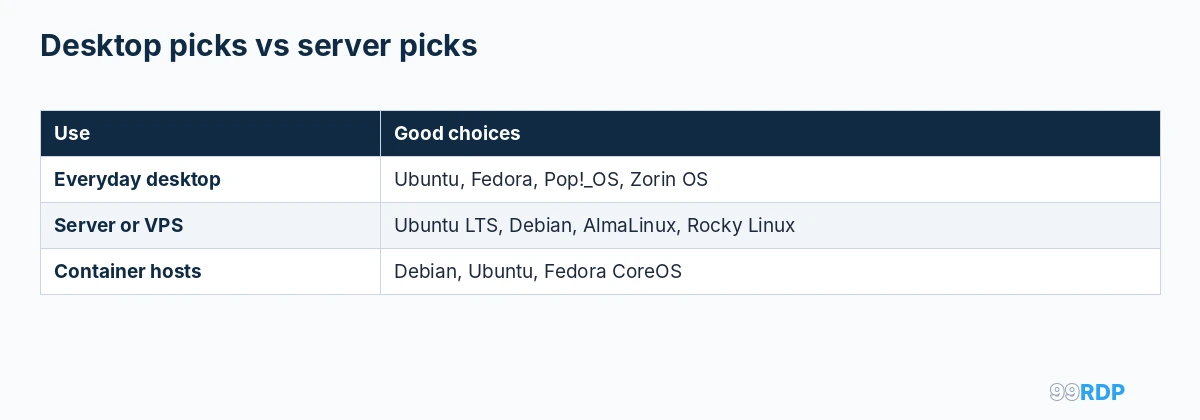
Desktop trends rarely matter on servers, where stability and long support matter most:
- Ubuntu 24.04 or 26.04 LTS: the widest software support and documentation.
- Debian 13: lean, stable and predictable.
- Rocky Linux or AlmaLinux 9/10: RHEL-compatible, with 10 years of support, ideal for cPanel and enterprise software.
Avoid short-lived releases such as Fedora or Ubuntu interim versions on production servers, because you will need to upgrade every few months.
Frequently asked questions
What is the best Linux distro for beginners in 2026?
Linux Mint, Ubuntu 26.04 LTS and Zorin OS are the easiest starting points. Pop!_OS is a good choice for laptops with NVIDIA graphics.
Is KDE Linux ready to use?
Not for most people yet. It is in alpha and working towards a beta, so it is best for testers and enthusiasts.
Which Linux distro is best for gaming?
Bazzite, CachyOS and Pop!_OS are popular gaming choices because they ship recent drivers and Steam support out of the box.
Which Linux is best for a VPS?
Ubuntu LTS, Debian, Rocky Linux and AlmaLinux. They have long support periods and are supported by most hosting tools.